



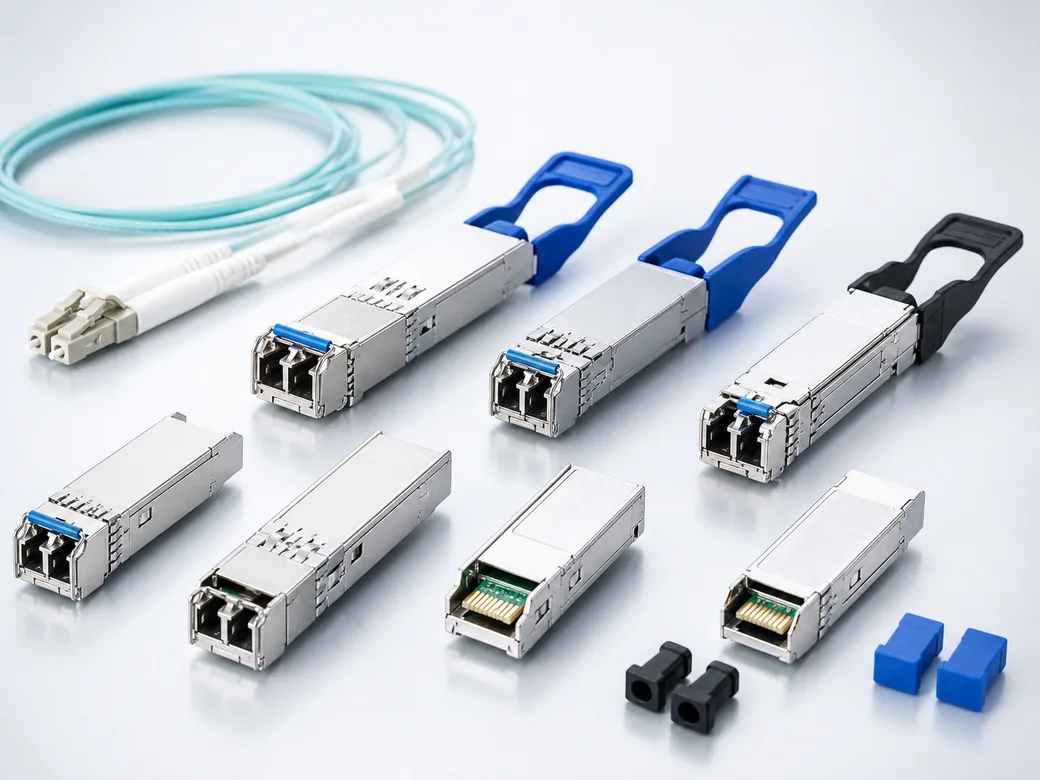
Short answer: AI data center fiber cabling should be designed around topology, lane mapping, reach, optical loss and migration—not around a single transceiver part number. As 800G deployment grows and 1.6T Ethernet enters planning, MPO trunk polarity, ODF port capacity, connector cleanliness and breakout strategy determine whether a fabric can be changed without expensive recabling.
The Ethernet Alliance’s 2026 roadmap shows the industry’s continued expansion across 800 Gb/s, 1.6 Tb/s and future speeds. That does not mean every site needs 1.6T immediately. It means new fiber pathways should avoid preventable constraints while procurement teams still control trunk counts, panel space and testing requirements.
Why AI Fabrics Put Pressure on the Physical Layer
AI clusters create dense east-west traffic and connect large numbers of accelerators through leaf-spine or scale-up fabrics. Link counts rise quickly, maintenance windows become valuable and one contaminated connector can affect a high-capacity path. The physical layer therefore needs repeatable polarity, documented port mapping and serviceable density—not merely high strand counts.
At OFC 2026, Ethernet Alliance demonstrations focus on multivendor interoperability across advanced Ethernet rates. Interoperability at the equipment level makes disciplined passive-infrastructure documentation even more important: the cabling must remain understandable when optics or switch platforms change.
Start With the Optical Interface, Then Specify the MPO Trunk
MPO is a multi-fiber connector family, not a complete performance specification. An RFQ should state fiber type, fiber count, connector gender, key orientation, polarity method, end-face geometry, insertion-loss grade, jacket rating, pulling-eye requirement, branch length and labelling scheme. “MPO cable” by itself leaves too many decisions open.
| Planning layer | Question to answer | Deliverable |
|---|---|---|
| Network | Which ports connect now and after migration? | Port and lane map |
| Optics | Parallel or duplex, multimode or single-mode, what reach? | Approved interface list |
| Passive channel | How many mated pairs and what loss budget? | Channel calculation |
| ODF | How much density and spare capacity? | Rack-unit and port plan |
| Operations | How will polarity, cleaning and testing be controlled? | Method statement and records |
Polarity and Lane Mapping Cannot Be an Afterthought
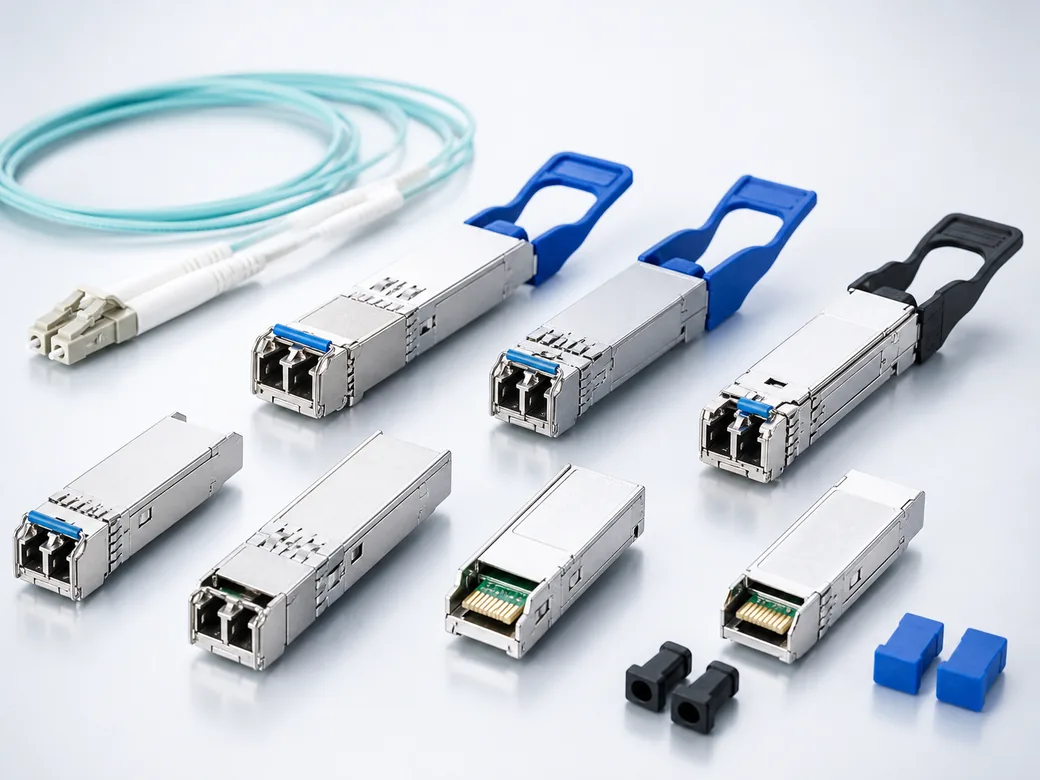
Parallel optics distribute transmit and receive lanes across multiple fibers. Trunk polarity, cassettes, adapters and patch cords must preserve the intended lane relationship end to end. A mix of undocumented Method A, B or C components can create a fault that looks like an optic or switch problem.
Create a polarity drawing before ordering. Assign identifiers to both ends of every trunk, every ODF port and every breakout leg. For changes, require the installer to update the same source record. A correct cable without a correct record is still expensive to operate.
Choose Fiber Type and Reach With Migration in Mind
Multimode and single-mode solutions serve different reach, cost and interface needs. The right answer depends on the approved optical specification, not on a general preference. Short in-row or intra-room links may favour multimode parallel optics, while longer campus or data-hall links may favour single-mode. Breakout applications also change strand and port-count calculations.
Ask whether future migration keeps the same fiber plant, changes from parallel to duplex, or changes breakout ratios. A modular optical distribution frame with replaceable adapter plates or cassettes can protect rack investment even when the front-end connection changes.
Loss Budget, Cleaning and Inspection Are One System
A high-speed optical channel has a finite loss budget. Count connector pairs, splices and engineering margin, then compare the total with the optical interface requirement. Do not treat a “low-loss” label as a channel calculation.
Inspection and cleaning should happen before mating and before retesting a failed link. Multi-fiber end faces require appropriate tools and technique because one dirty region can affect several lanes. Test records should identify wavelength, direction, reference method, limit and equipment used.
ODF Capacity Must Include Operations, Not Just Ports
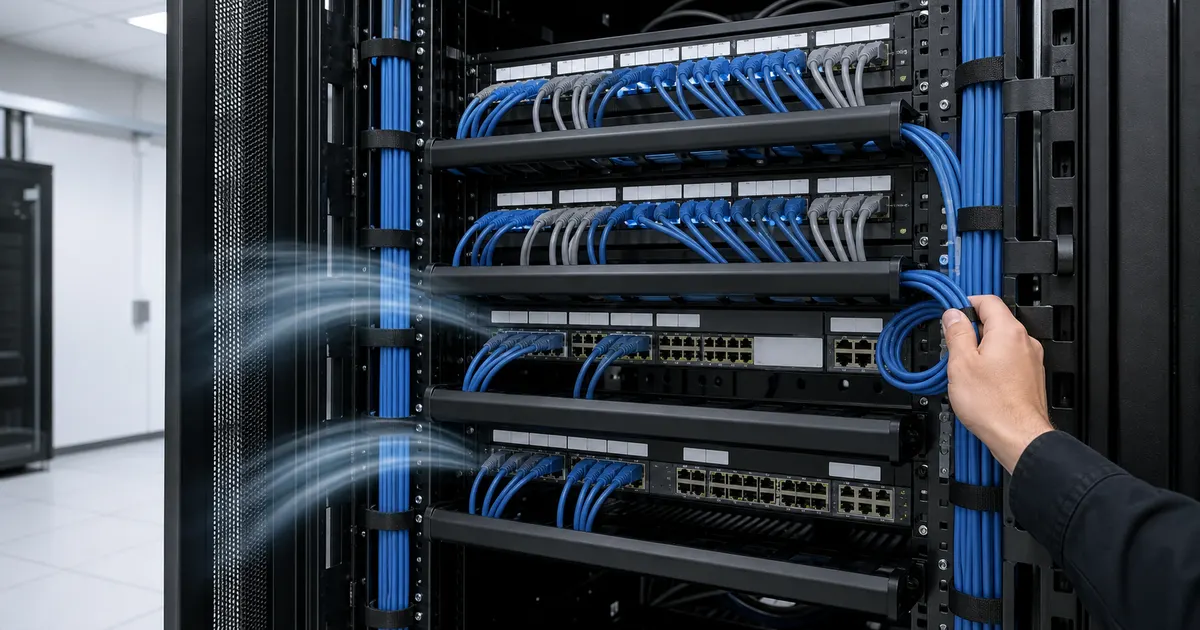
Maximum faceplate density is not always maximum usable density. Technicians need finger access, bend-radius control, slack management, clear labels and a safe path for moves, adds and changes. Specify rear-entry direction, tray depth, cable retention and patch-cord routing as part of the ODF design.
Reserve capacity should be intentional. Document spare ports, spare fiber strands, panel space and pathway capacity separately. A percentage alone is ambiguous if the deployment uses mixed connector formats or future breakouts.
Migration Checklist for 800G and 1.6T Planning
- Approve present and candidate future optical interfaces and reaches.
- Map switch ports, optical lanes, trunk fibers and ODF positions end to end.
- Specify MPO fiber count, gender, polarity, loss grade and end-face requirements.
- Calculate the complete channel loss, including every mated pair and margin.
- Validate rack space, pathway fill, bend radius and service loops.
- Define inspection, cleaning, OLTS testing and record formats before installation.
- Keep cassettes, adapters and patch cords in the bill of materials—not only trunks.
Frequently Asked Questions
Q: Does 800G always require MPO?
A: No. Interface choices include parallel and duplex optical approaches. Follow the approved transceiver specification and reach, then build the passive channel around it.
Q: Should a new project install extra fiber for 1.6T?
A: Usually some engineered spare capacity is sensible, but strand count alone is not a migration plan. Reserve ODF ports, rack space and pathway capacity and document the intended future interface.
Q: What should an MPO supplier provide?
A: Request polarity and pin configuration, fiber and jacket specifications, insertion-loss test results, end-face inspection criteria, serialised labels and packaging that protects the connectors.
Conclusion
AI data center fiber cabling is a lifecycle decision. A well-documented MPO and ODF system lets teams move between optics, breakouts and equipment generations without losing control of polarity, loss or serviceability. Start from topology and approved interfaces, then make each passive component traceable.
DetwilerTech supports MPO/MTP assemblies, ODF solutions and optical transceivers. Read our SFP transceiver selection guide or send your port map, reach and loss requirements for a project review.
Primary Sources
Planning a high-density fiber project? Contact DetwilerTech for product recommendations, OEM/ODM support and project-based connectivity solutions.
Author: DetwilerTech Technical Content Team — focused on practical fiber-infrastructure planning for international B2B projects.

CUSTOMER DISCUSSION
Article Discussion
Read questions and experience from other customers, then add your own product or project feedback.
No published comments yet. Start the first useful discussion.
Sign in to comment
Registered customers use their account display name and can track moderation status from the account page.
Customer Login Create an Account