



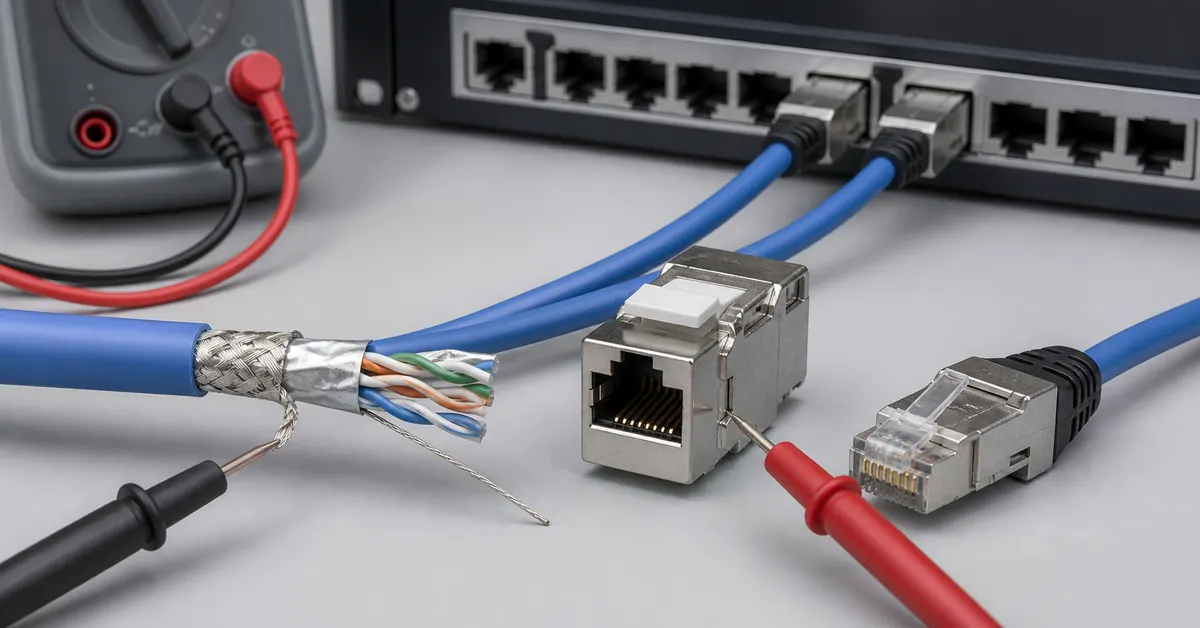
Short answer: Cat6A is increasingly the safer default for new Wi-Fi 7 access point cabling because it supports 10GBASE-T to 100 metres while giving designers more margin for heat, alien crosstalk and future uplink upgrades. Cat6 can still be valid for defined shorter links, but the decision should be made from the AP model, negotiated Ethernet speed, PoE load, route length and installation environment—not from the Wi-Fi logo alone.
Wi-Fi 7 moves wireless capacity forward, but every ceiling-mounted access point still depends on the copper channel behind it. A premium AP connected through a marginal horizontal link can be limited by the wired uplink, voltage drop or inconsistent field terminations. For contractors and distributors, that makes the cable, jack, patch panel and patch cords one engineered channel.
Why Wi-Fi 7 Changes the Cabling Conversation
New enterprise access points increasingly use multi-gigabit Ethernet interfaces instead of a simple 1G uplink. Cisco’s CW9178I installation guidance, for example, specifies Cat6A for 10GBASE-T at 100 metres and allows Cat6 only for shorter distances. The exact limit is device- and design-specific, but the practical message is clear: the permanent link should be selected against the AP’s wired interface and distance requirement.
Wi-Fi refresh cycles are often shorter than building-cabling cycles. A horizontal cable installed today may remain in service through several AP generations. Designing only for the first switch and AP combination can create avoidable replacement work above occupied ceilings later.
Cat6 Versus Cat6A for Access Point Links
| Planning factor | Cat6 | Cat6A |
|---|---|---|
| 10GBASE-T planning | May be suitable at reduced distance under defined conditions | Designed for 10GBASE-T to 100 m |
| Alien crosstalk margin | More route-dependent | Stronger basis for full-channel planning |
| Cable size | Usually smaller and easier to route | Usually larger; pathway fill must be checked |
| Future AP upgrades | Acceptable when requirements are fixed | Lower-risk default for long-life installations |
| Project cost | Lower initial material cost | Higher initial cost, potentially lower recabling risk |
The table is a planning aid, not a substitute for the AP manufacturer’s instructions or the project’s applicable cabling standard. A compliant channel also depends on component category, workmanship and field-test results.
PoE Heat and Voltage Drop Matter Too
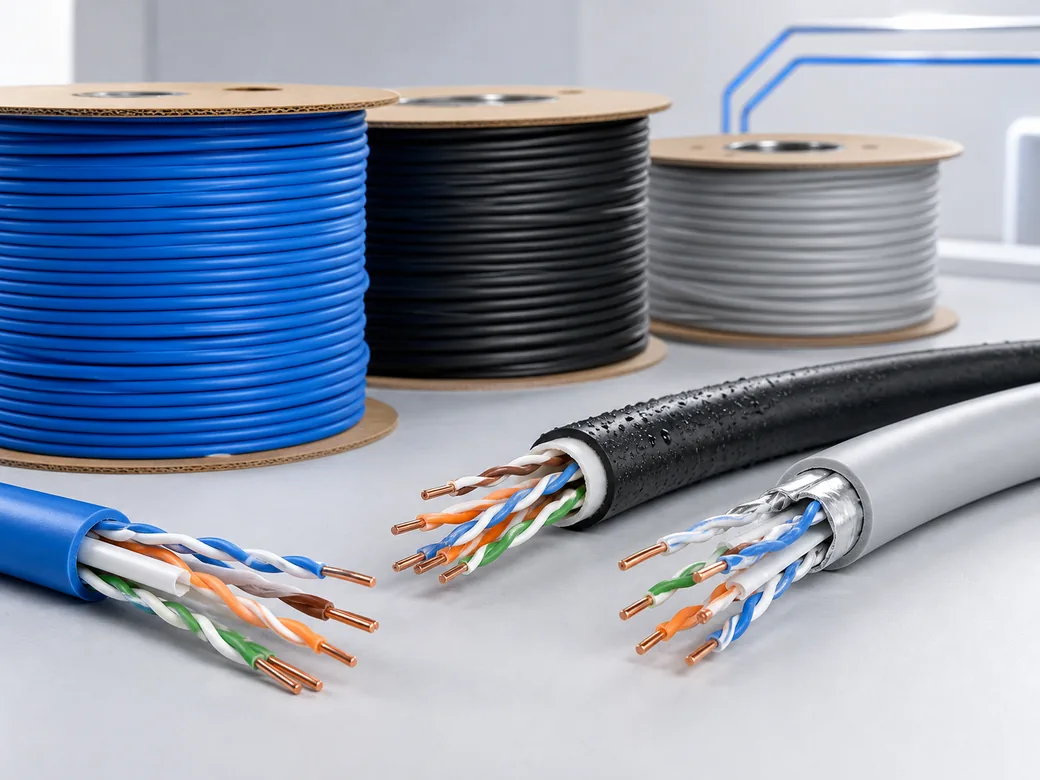
IEEE 802.3bt expanded power delivery by using all four pairs. Higher current raises the importance of conductor resistance, pair-to-pair resistance balance, connector quality and bundle temperature. A link can pass data testing and still be a poor power-delivery choice if cable construction, bundle size or ambient temperature was ignored.
Ask suppliers for actual conductor material and gauge, outside diameter, temperature rating, DC resistance data and compatibility with the selected plugs and jacks. Copper-clad aluminium should not be substituted where project specifications require solid copper. For large ceiling bundles or warm return-air spaces, the designer should apply the relevant temperature and bundle guidance rather than relying on a generic category label.
The Complete Channel Must Match
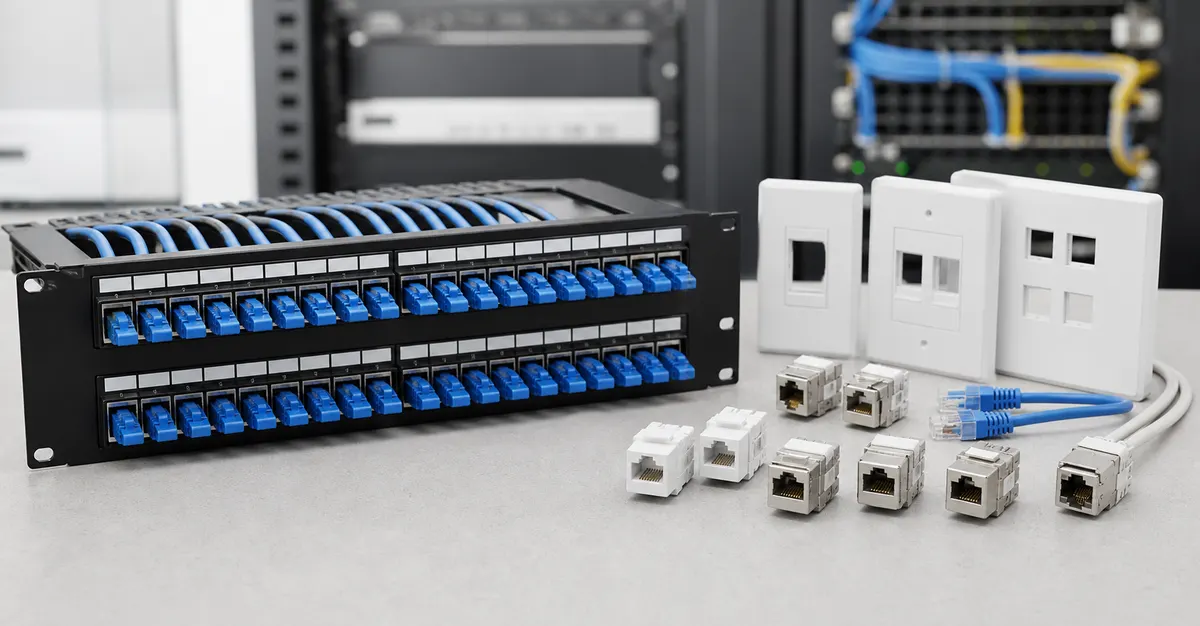
A Cat6A cable alone does not create a Cat6A channel. The keystone jack, patch panel, consolidation point when used, patch cords and field termination all influence performance. Shielded systems also require intentional bonding and continuity; shielding that is terminated inconsistently can add complexity without delivering the expected benefit.
A Practical AP Cabling Checklist
- Confirm the AP port: record supported wired speeds and the manufacturer’s cable-distance guidance.
- Confirm power: identify the required PoE class, switch power budget and any derating conditions.
- Measure the route: include patch cords and service loops, not just the drawing distance.
- Check pathways: verify conduit fill, bend radius, tray capacity and ceiling accessibility.
- Specify the channel: align cable, jacks, panels and cords with one documented performance target.
- Plan testing: define certification limits, test direction, link IDs and acceptance records before installation.
When Existing Cat6 May Still Be Reasonable
Do not automatically remove working Cat6. First identify the AP’s actual Ethernet negotiation target, route length and existing test history. A short, well-installed Cat6 link may serve a specific multi-gigabit application, especially when the equipment vendor explicitly permits it. Validate representative links in the real pathway and under the intended power load.
For a new build or major renovation, however, Cat6A often provides a cleaner procurement rule and better upgrade margin. Its value is highest where access is difficult, ceiling labour is expensive, links approach channel limits or the building is expected to support multiple AP generations.
Frequently Asked Questions
Q: Does every Wi-Fi 7 access point require Cat6A?
A: No. Requirements depend on the AP’s Ethernet port, speed, distance and vendor guidance. Cat6A is a safer default for new 10G-ready 100 m designs, not a universal rule for every installation.
Q: Is shielded Cat6A always required?
A: No. U/UTP or shielded construction should be selected for the electromagnetic environment and project specification. Shielded channels need correct bonding and component continuity.
Q: What should be included in the RFQ?
A: Include conductor construction, category, jacket rating, CPR or fire-performance requirement where applicable, length, colour, packaging, PoE conditions, component compatibility, test standard and required reports.
Conclusion
Wi-Fi 7 access point cabling should be treated as power and data infrastructure with a service life longer than the first AP. Cat6A is often the lower-risk default when projects need 10GBASE-T at full channel distance, stronger noise margin and room for future upgrades. Existing Cat6 can remain useful when a measured, vendor-aligned design proves it is adequate.
DetwilerTech supplies bulk Ethernet cable, keystone jacks, patch panels and RJ45 modular plugs for structured-cabling projects. Review our related Cat6A shielding and grounding guide, or contact our team with your distance, PoE, jacket and packaging requirements.
Primary Sources
Need Professional Network Connectivity Solutions? Contact DetwilerTech for product recommendations, OEM/ODM support and project-based connectivity solutions.
Author: DetwilerTech Technical Content Team — focused on practical structured-cabling selection for international B2B projects.

CUSTOMER DISCUSSION
Article Discussion
Read questions and experience from other customers, then add your own product or project feedback.
No published comments yet. Start the first useful discussion.
Sign in to comment
Registered customers use their account display name and can track moderation status from the account page.
Customer Login Create an Account