



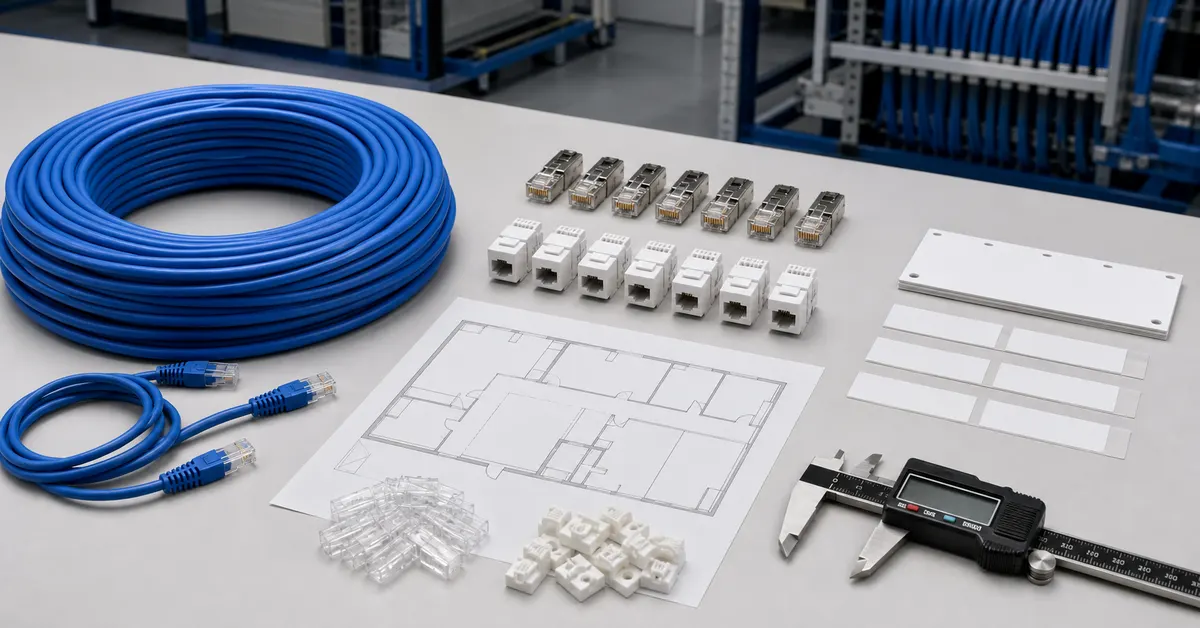
A structured cabling quotation can look precise while still hiding a large scope gap. One supplier may assume solid copper conductors, another may quote a different jacket, and a third may exclude patch cords, cable managers or project labeling. The totals appear comparable, but the systems are not.
The cure is not a longer shopping list. It is a structured cabling BOM checklist that connects each part to the application, installation method and acceptance plan. The seven-layer method below is designed for distributors, contractors, system integrators and enterprise project teams preparing an RFQ.
Why “Cat6 cable plus jacks” is not a complete specification
Category names describe only part of the requirement. A usable BOM also defines where the link starts and ends, the cable construction, the termination interface, the rack arrangement, the number of service changes expected and the evidence required before mass production. Missing any of these can create a technically different quotation.
Start by separating three ideas:
- Performance intent: the application and link or channel objective.
- Physical configuration: cable, connectors, outlets, patching and rack-side hardware.
- Commercial delivery: quantities, packaging, labels, documentation, samples and acceptance.
The seven-layer structured cabling BOM checklist
1. Project topology and outlet count
State the building areas, telecom rooms, work-area outlets and approximate cable routes. Record whether quantities are per outlet, per link, per floor or total project. Add a realistic spare percentage as a separate line instead of hiding it inside the base quantity.
2. Horizontal cable construction
Specify the required category, shielding approach, conductor material and construction, conductor size, pair count, jacket type, color and package length. If 305 m pull boxes are required, define box labeling, sequential length marking and pallet expectations. Review the bulk cable range while building this section.
3. Work-area termination
List the jack or connector format, shielded or unshielded construction, color, faceplate module, outlet labeling and mounting depth. Cable AWG alone does not prove compatibility: insulation diameter, conductor type, cable outside diameter and termination method matter. Compare available keystone jack options against the actual cable.
4. Rack-side termination and organization
Define port density, rack-unit budget, modular or fixed termination, shield bonding method and front/rear service access. Include horizontal and vertical management rather than treating it as an afterthought. See the cable management range when calculating the rack layout.
5. Patching and user-side connection
Add patch cords for both rack and work-area sides. Record length, color, shielding, boot style, conductor construction and labeling. For moves and changes, a simple color convention can save more labor than a small component price difference. Use the patch cord category to define the required family.
6. Installation, identification and packaging
List termination tools, strain relief, grounding accessories, hook-and-loop ties, labels and any project-specific kits. Decide whether materials should be packed by floor, cabinet, zone or standard carton. A deployment-ready packing plan reduces site sorting and helps the receiving team detect shortages earlier.
7. Sample, test and document approval
Define what must be approved before volume release: appearance, dimensional fit, termination result, link configuration, packaging, label artwork and the requested test method. Do not ask for “all test reports” without context. Name the sample configuration and the acceptance evidence the project actually needs.
| BOM layer | Decision to freeze | Typical omission |
|---|---|---|
| Topology | Outlets, links, rooms, spares | Quantities counted differently |
| Cable | Category, shield, conductor, jacket, length | Different construction under one category name |
| Termination | Jack/plug format and cable compatibility | AWG listed without insulation dimensions |
| Rack | Ports, RU, grounding, service access | Cable management excluded |
| Patching | Length, color, shielding, labels | Only permanent-link parts counted |
| Delivery | Kitting, cartons, labels, pallet plan | Site sorting labor ignored |
| Approval | Sample build, test method, documents | Price approved before configuration |
A one-page RFQ recipe
- Attach a floor or topology drawing and a quantity table.
- Mark mandatory specifications separately from preferred options.
- Provide cable and connector dimensions when compatibility is critical.
- Request a line-by-line quotation with assumptions and exclusions.
- Identify the representative sample channel to build first.
- Define packaging, labeling and document deliverables before price approval.
Where an integrated manufacturer helps
When a project needs a non-standard fit, label, housing, shield or packaging format, the conversation may cross mold design, precision stamping, injection molding, assembly and testing. DetwilerTech’s integrated manufacturing workflow makes those interfaces easier to review as one project instead of isolated components. The result still depends on a clear requirement and an approved sample; integration does not replace engineering confirmation.
Frequently asked questions
What is the minimum information needed for a structured cabling quotation?
Provide outlet count, topology, cable category and construction, conductor and jacket requirements, termination hardware, rack-side components, quantities, packaging and the required sample or test approval process.
Should installation accessories be included in the same BOM?
Yes. Cable managers, patch cords, faceplates, labels, grounding accessories and termination tools can change compatibility and labor, so they should be listed or explicitly assigned to another scope.
How can buyers compare two supplier quotations fairly?
Issue the same requirement matrix to every supplier, separate mandatory from optional items, record assumptions and exclusions, and approve a representative sample configuration before treating prices as comparable.
Turn your project outline into a quote-ready BOM
Browse the DetwilerTech product catalogue, then send the topology, quantities and mandatory specifications. We can review the component interfaces and identify the information still needed for a comparable sample and quotation.

CUSTOMER DISCUSSION
Article Discussion
Read questions and experience from other customers, then add your own product or project feedback.
No published comments yet. Start the first useful discussion.
Sign in to comment
Registered customers use their account display name and can track moderation status from the account page.
Customer Login Create an Account