




Short answer: High-power PoE cabling must be specified as a complete four-pair power-and-data channel. Installers should verify solid-copper conductor construction, DC resistance and resistance balance, cable outside diameter, insulation dimensions, connector contact and strain-relief compatibility, bundle conditions and termination quality. A plug that fits “Cat6” is not automatically suitable for every Cat6 cable or PoE load.
IEEE 802.3bt expanded power delivery to all four pairs, enabling higher-power devices such as wireless access points, cameras, displays, lighting gateways and building controls. The standard defines Ethernet power delivery, but a reliable site still depends on the cabling system and installation environment.
What IEEE 802.3bt Changes in Practice
Earlier PoE generations commonly energised two pairs. Four-pair power increases useful delivery but also raises the importance of balanced conductor paths and consistent terminations. Current passing through copper creates heat; higher resistance causes more voltage drop and heat. The result is a design issue across cable, connectors, bundles and ambient temperature.
The powered device’s nameplate is not the only input. The design should identify the power sourcing equipment, requested power class, channel length, conductor temperature rating and expected simultaneous load. Switch power budgets and thermal behaviour should also be checked at the system level.
Connector-to-Cable Fit Is a Technical Requirement
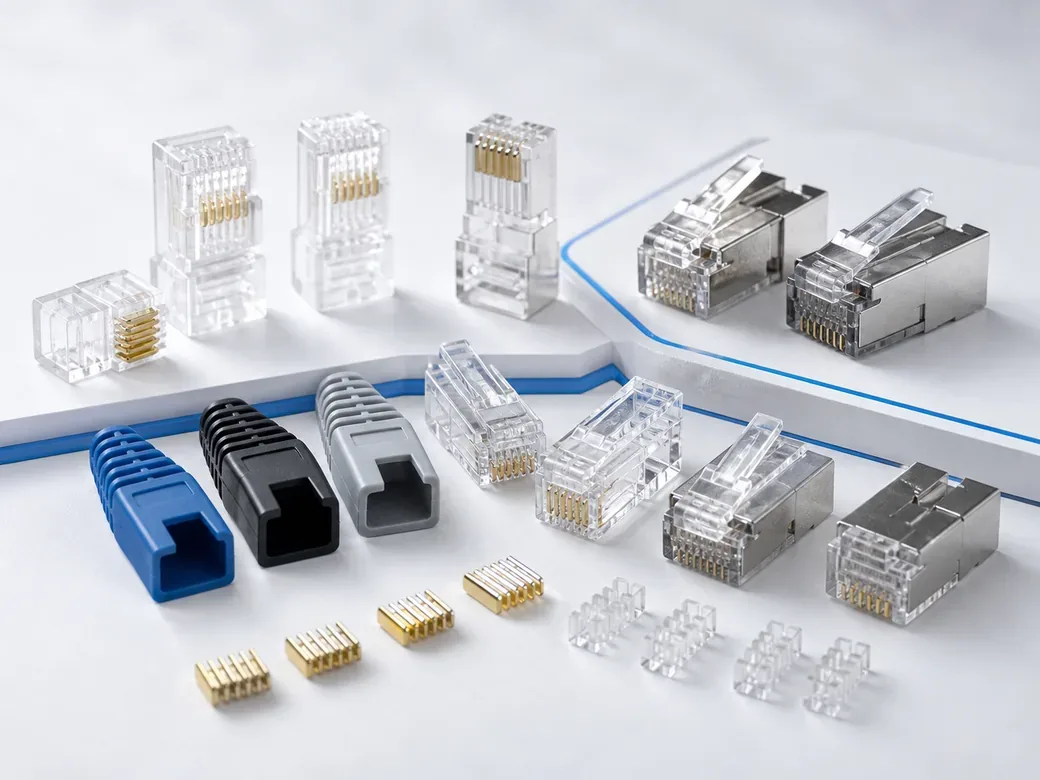
RJ45 plugs and keystone jacks are built for defined conductor sizes, insulation diameters, cable outside diameters and solid or stranded constructions. If these ranges do not match the selected cable, installers may see incomplete contact, split conductors, excessive untwist, weak strain relief or intermittent faults.
Before bulk purchase, request dimensional drawings and terminate samples using the actual cable and production tool. Check conductor order, insertion depth, jacket capture, contact seating and pull resistance. Then test data performance and DC resistance rather than approving only by appearance.
Five RFQ Items That Reduce PoE Risk
| RFQ item | Why it matters | Evidence to request |
|---|---|---|
| Conductor material and gauge | Influences resistance, voltage drop and termination fit | Datasheet and sample measurement |
| DC resistance and unbalance | Shows consistency across pairs and conductors | Test method and results |
| Connector wire range | Prevents mismatch with conductor and insulation size | Dimensional specification |
| Cable OD and jacket rating | Affects strain relief, pathway fill and temperature | Drawing and compliance documents |
| Contact construction | Affects mating reliability and lifecycle | Material/plating specification and qualification test |
Avoid unsupported marketing claims such as “PoE ready” without defined test conditions. Ask which cable, connector, length, ambient temperature and load were used. For OEM orders, lock approved drawings and samples before mass production.
Bundle Temperature Can Change the Design
Large cable bundles limit heat dissipation. Ceiling spaces, outdoor enclosures and equipment rooms may also have higher ambient temperatures than the occupied area. The designer should consider bundle size, conductor gauge, jacket temperature rating, pathway ventilation and the number of simultaneously powered cables.
Larger conductors may reduce resistance, but they also increase cable diameter and can affect pathway fill or connector compatibility. This trade-off is why the complete bill of materials should be validated together.
Field Termination Checklist
- Confirm the plug or jack supports the cable’s conductor type, gauge and insulation diameter.
- Maintain pair twist as close as practical to the termination point.
- Seat every conductor fully and capture the jacket in the strain-relief system.
- Use the specified crimp or termination tool and inspect wear parts regularly.
- Keep connector contacts protected from dust, moisture and construction debris.
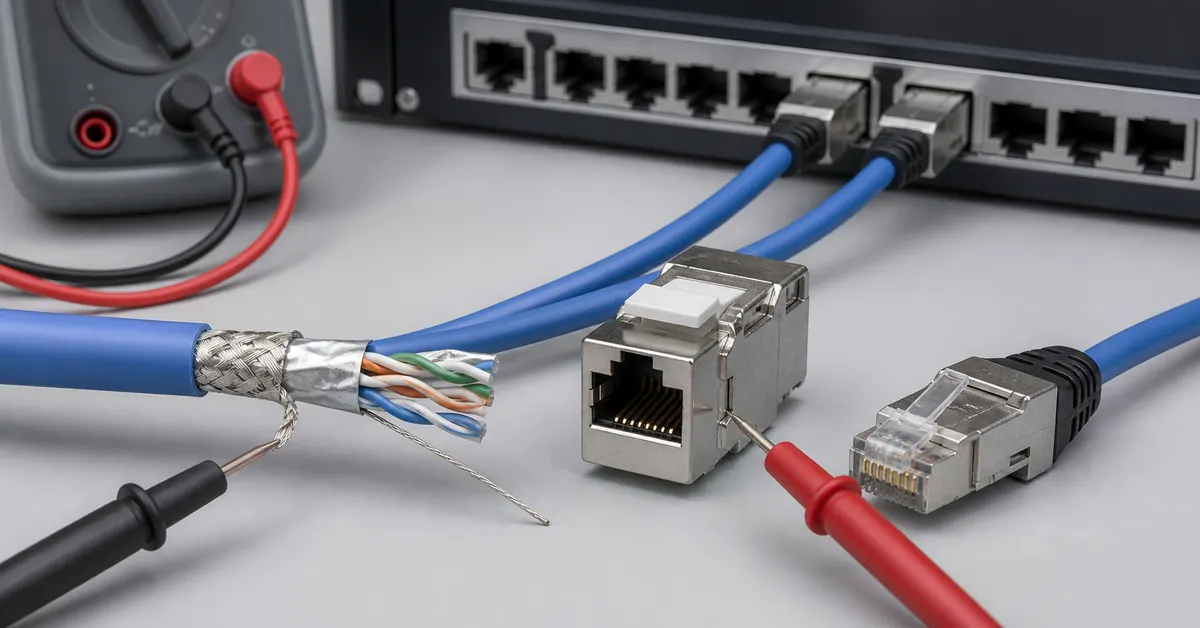
- Test wire map, length, data performance and resistance parameters required by the project.
- Label both ends and retain results against the link identifier.
Shielding Requires Continuity, Not Just Metal Parts
Shielded Cat6A may be selected for electromagnetic conditions or project requirements, but a metal plug alone does not create a controlled shield path. Cable screen, drain wire where applicable, plug, jack, panel and bonding system must be designed consistently. Review our Cat6A shield grounding and continuity guide for the commissioning questions that should be recorded.
How to Approve an OEM Connector Sample
Use the exact production cable, tool and termination instruction. Compare the sample with the controlled drawing, then verify fit across normal manufacturing tolerances. Run electrical and mechanical tests appropriate to the project, record the sample revision and keep a golden sample for incoming inspection.
DetwilerTech offers bulk cable, keystone jacks, RJ45 modular plugs and termination tools. For pass-through work, review the Cat6 pass-through modular plug and confirm dimensional compatibility with your cable.
Frequently Asked Questions
Q: Is Cat6A required for high-power PoE?
A: Not solely because of PoE. Category selection depends on data speed and channel requirements, while conductor resistance, bundle conditions, temperature and connector compatibility determine power-delivery suitability.
Q: Can one RJ45 plug fit both solid and stranded cable?
A: Only when its published contact design and wire range support both. Verify conductor and insulation dimensions and approve the exact cable-and-plug combination.
Q: What tests are most important after installation?
A: Start with wire map and category performance, then include resistance and resistance-unbalance parameters required by the project. Record the test method, limits and link IDs.
Conclusion
High-power PoE makes small component mismatches more consequential. Reliable projects define conductor construction, connector fit, bundle conditions and field verification before procurement. Sample approval should reproduce the real production combination—not a convenient substitute cable.
Share your cable OD, conductor size, PoE load, channel length, connector preference and target market with DetwilerTech. We can support component selection, OEM/ODM packaging and project-based sample evaluation.
Primary Source
Need a compatible high-power PoE channel? Contact DetwilerTech for product recommendations, OEM/ODM support and project-based connectivity solutions.
Author: DetwilerTech Technical Content Team — focused on practical connector and copper-cabling selection for international B2B projects.

CUSTOMER DISCUSSION
Article Discussion
Read questions and experience from other customers, then add your own product or project feedback.
No published comments yet. Start the first useful discussion.
Sign in to comment
Registered customers use their account display name and can track moderation status from the account page.
Customer Login Create an Account